Learning to Separate the Story From the Truth
Our minds are incredible storytellers.
Every day, your brain interprets events, predicts outcomes, and creates explanations for what is happening around you. This ability helps us navigate the world, solve problems, and learn from experience.
But there is something important to remember:
A thought is not automatically a fact. A belief can feel completely true and still be incomplete.
Why Our Brains Create Stories
The brain is designed to protect us. It looks for patterns and tries to prepare us for what might happen next.
This is helpful when we need to avoid danger.
But sometimes the same protective system creates stories that keep us stuck.
An anxious mind may tell you:
“Something bad is going to happen.”
“I won’t be able to handle this.”
“Everyone is judging me.”
“I need to stay in control.”
These thoughts are not random. They are often attempts by your mind to keep you safe.
The problem is that the brain sometimes uses old information to make predictions about the present.
The Difference Between a Thought and a Truth
Imagine you have the thought:
- “I am not good enough.”
That thought may feel powerful. It may even feel like a fact.
But a more helpful question is:
- “Is this a fact, or is this a story I learned?”
A fact is something that can be observed and verified.
A story is the meaning we attach to our experiences.
For example:
“I made a mistake” is an event.
“I always fail” is a story.
“Someone disagreed with me” is an event.
“Nobody respects me” is a story.
The stories we create can influence our emotions and behaviors far more than the original event.
The Protective Stories We Carry
Many of our strongest beliefs developed for a reason.
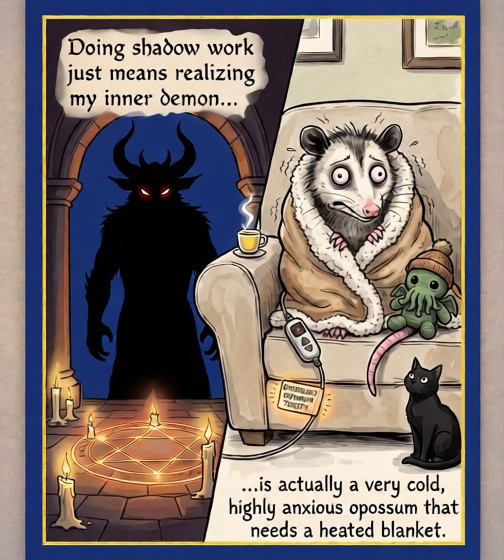
The part of you that worries may be trying to prevent disappointment.
The part of you that criticizes yourself may believe it is helping you improve.
The part of you that avoids situations may be trying to protect you from fear or rejection.
Instead of fighting these parts of ourselves, we can become curious about them.
What are they trying to accomplish?
When did they first learn this was necessary?
Do they still need to protect you in the same way?
Creating Space for a New Story
Changing your relationship with your thoughts does not mean pretending everything is fine. It means learning to recognize that you have choices.
- You can notice a thought without automatically believing it.
- You can feel an emotion without letting it control every decision.
- You can acknowledge your past without allowing it to write your future.
Hypnosis can be a powerful tool for working with these deeper patterns because it allows us to access the automatic beliefs and responses that often operate beneath conscious awareness.
The goal is not to erase your experiences.
The goal is to create more freedom in how you respond.
So ask yourself:
- What is a thought you have about yourself that you have never stopped to question?
The story may have been with you for a long time.
But that does not mean it has to stay forever.