Your heart races at 2 AM. Your stomach knots during a perfectly normal Tuesday. You scan the room for exits before you’ve even sat down.
Here’s what nobody told you: anxiety isn’t a character flaw. It’s a prediction error running on outdated software.
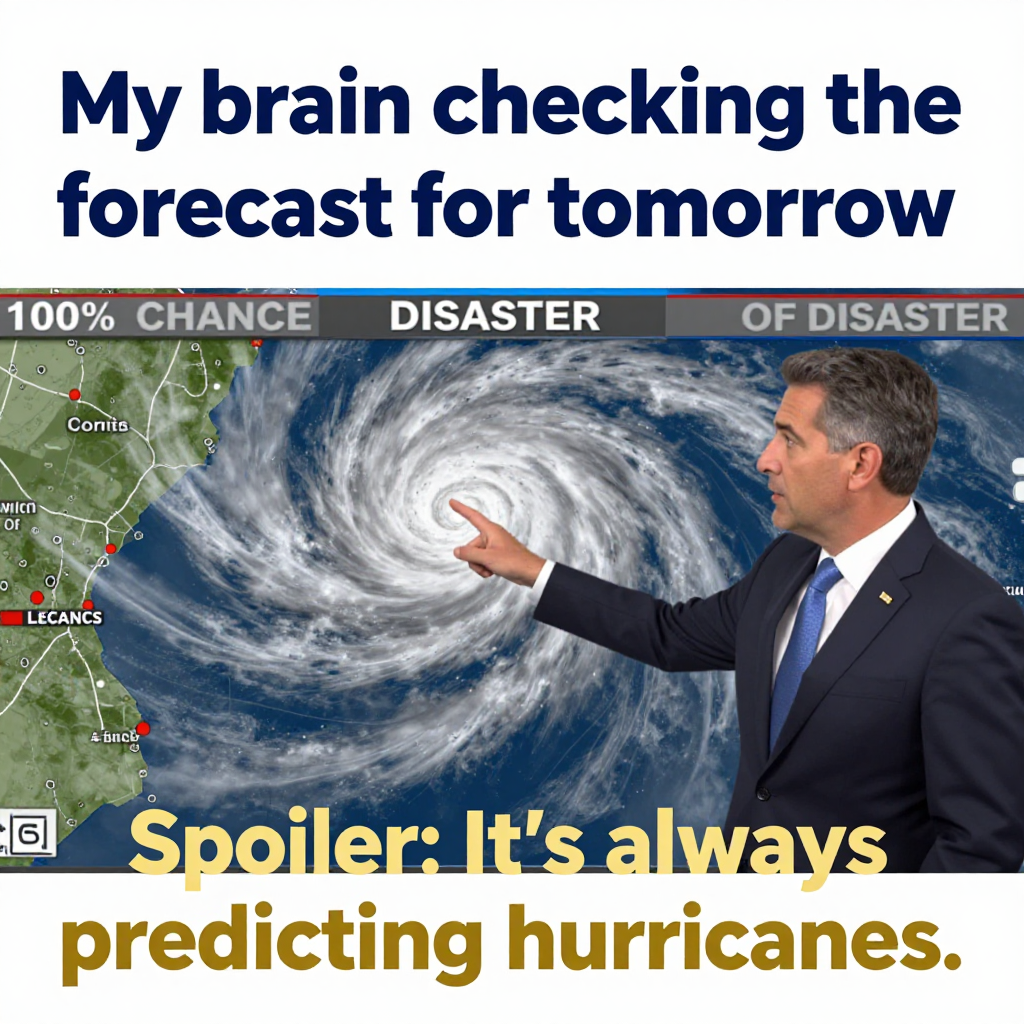
Your brain is essentially a prediction machine. Every second, it forecasts what will happen next based on your past experiences, then prepares your body for that anticipated future. This is called predictive processing—and it’s happening beneath conscious awareness, about 11 million bits of information per second.
The problem? Your nervous system learned early that vigilance equals survival. Maybe unpredictability was dangerous in your childhood. Maybe you had to stay hyper-aware to stay safe. So your brain built a model of the world that says: “Uncertainty = threat. Relaxation = vulnerability.”
Now, when nothing is actually wrong, your brain manufactures something to be wrong about. It predicts danger, then scans for evidence to confirm that prediction. This is why you can’t relax when everything looks fine on paper—your nervous system is operating on a different timeline entirely.
Here’s what you can do about it:
Your brain updates its predictions through experience, not insight. You need to give your nervous system new data that contradicts the old threat model. Three ways to start:
1. The 90-Second Rule. When anxiety hits, your body floods with stress hormones. This physiological wave lasts about 90 seconds if you don’t feed it with thoughts. Set a timer. Breathe slowly. Don’t problem-solve. Just survive the wave. You’re teaching your body it can handle the sensation without catastrophe.
2. Safety Anchoring. Your brain needs evidence that relaxation won’t kill you. Start small—five minutes of genuine rest without checking your phone. When your brain panics and says “danger!” respond with “I’m safe right now” and stay put. This is how you update the prediction model.
3. Work With the Prediction, Not Against It. Instead of “I’m broken for feeling anxious,” try: “My brain is trying to protect me from a predicted threat. Thank you. But I’m actually safe right now.” This interrupts the shame spiral that keeps the prediction loop running.
But here’s the truth: Most people try this for a week, don’t see immediate results, and quit. Or they can’t get their nervous system to actually believe the safety because the prediction error is running too deep.
This is where hypnosis comes in.
Hypnosis works directly with your predictive brain. While traditional talk therapy tries to convince your thinking mind that you’re safe, hypnosis speaks directly to the part of your brain that’s making the predictions in the first place. We bypass the resistance, update the threat model at the source, and teach your nervous system—through direct felt experience—that calm is survivable.
Most of my clients have tried everything. Meditation. Therapy. Breathing apps. They know intellectually they’re safe. Their body just never got the memo.
If you’re tired of managing symptoms and ready to actually retrain your nervous system, let’s talk. I offer free consult calls to assess whether your specific anxiety pattern is something we can shift with hypnosis.
👉 Schedule your free strategy call here: https://hoosierhypnosis.com/schedule-a-free-stragegy-call
We’ll spend 20 minutes mapping your specific prediction pattern and I’ll tell you honestly if I can help or if you need a different approach.
Your brain learned this protection. It can learn something new.